Bacteriostatic Water
Bacteriostatic Water supplied as 30ml lyophilised powder, to a ≥99% (HPLC) purity specification with mass-spec identity. Documentation for your lot is available on request - quote the number printed on the label.
For laboratory research use only. Not for human or veterinary consumption.
$12.00
/ 30mlFor laboratory research use only. Not for human or veterinary consumption.
Technical overview
About Bacteriostatic Water
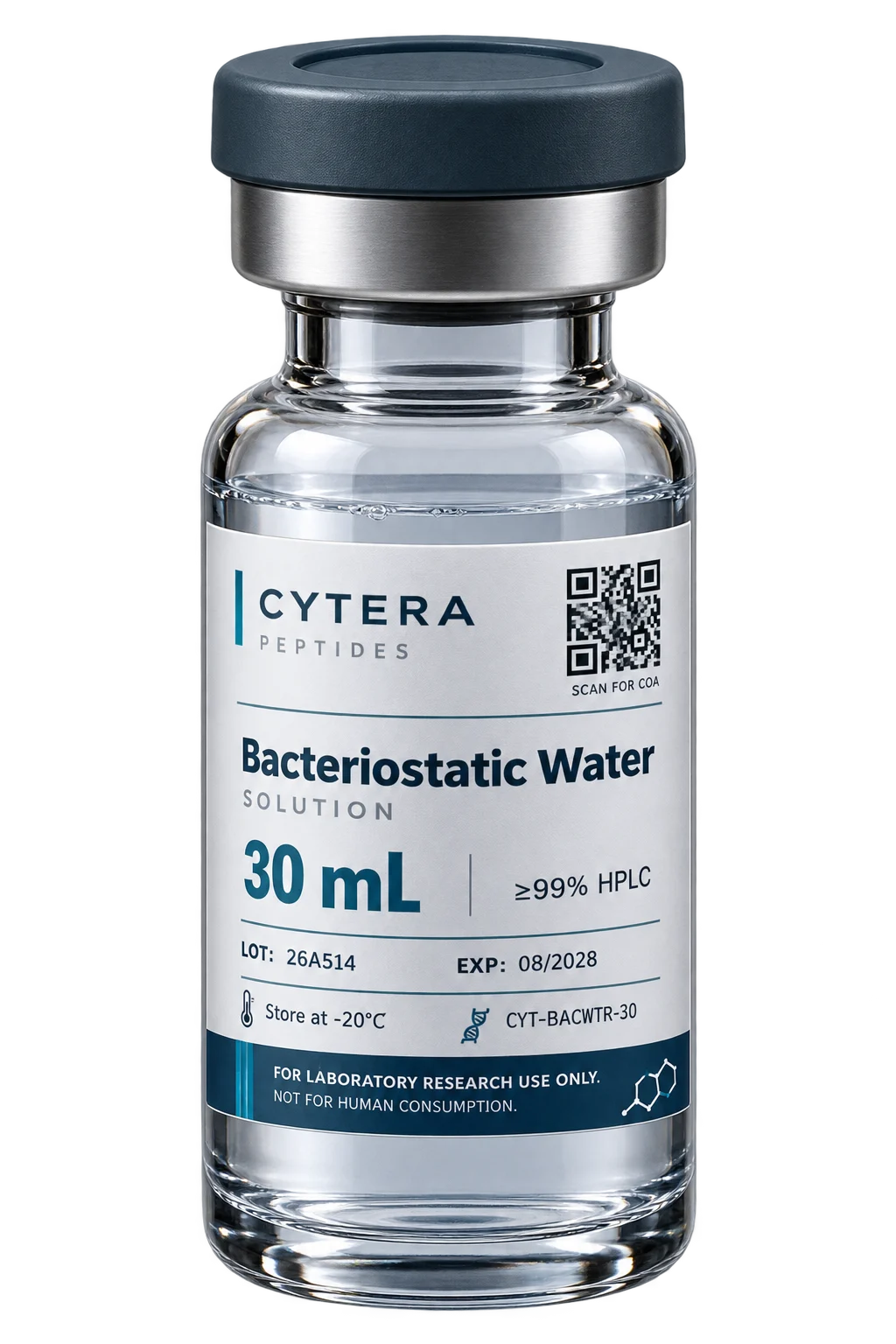
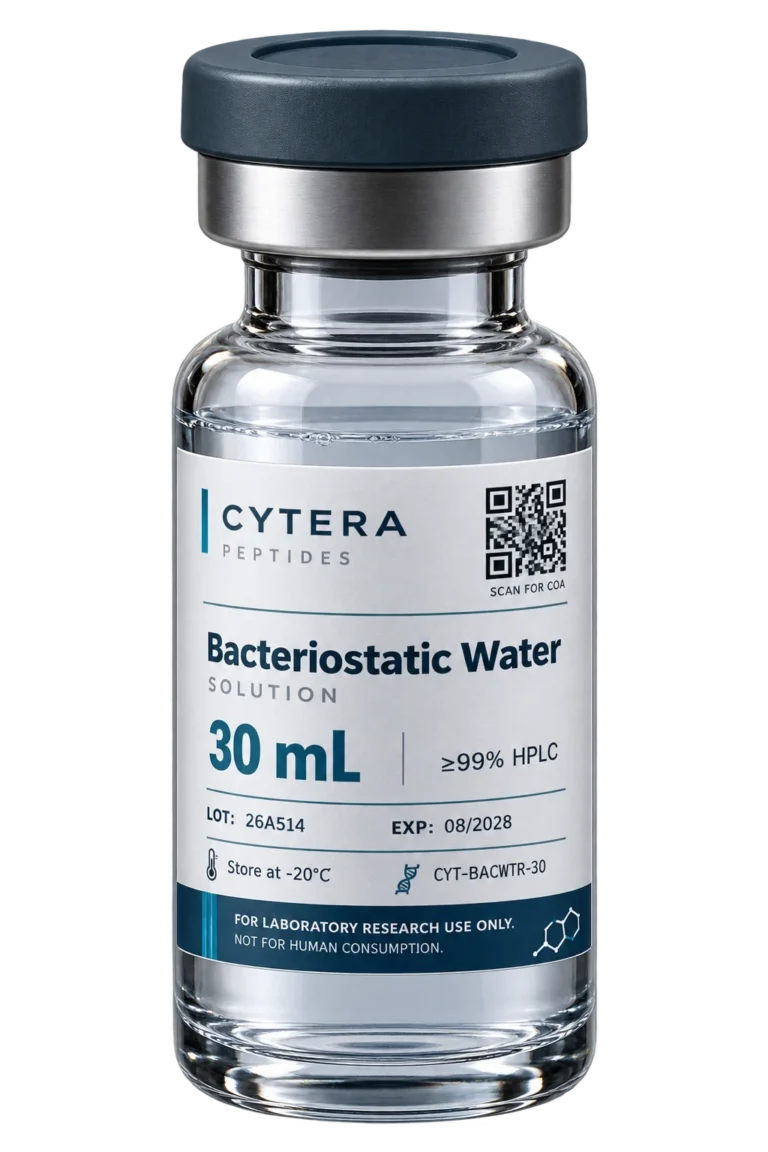
Bacteriostatic Water is supplied in 30ml vials for reconstituting lyophilised research peptides. Sealed at fill, lot-coded, and shipped same day from within the United States.
Bacteriostatic Water is the standard solvent for any lyophilised vial that will be entered more than once. This listing is intended for qualified researchers and laboratory purchasers.
What Bacteriostatic Water is used for
Bacteriostatic Water is the solvent of choice in peptide research because it solves two problems at once: it dissolves the lyophilised cake into a solution that can be measured by volume, and it keeps that solution usable across the days or weeks a protocol runs. Plain water does the first job but not the second.
Lyophilised peptides arrive as a dry cake and must be dissolved before any measurement can be made. Bacteriostatic Water contains 0.9% benzyl alcohol as a bacteriostatic preservative, which suppresses bacterial growth and allows a vial to be entered more than once over a period of weeks. The water itself is water for injection grade, filtered and sealed at fill.
Beyond reconstitution, Bacteriostatic Water is used to dilute a stock solution to a working concentration, to rinse a syringe between draws of the same material, and as the solvent in the free peptide calculator, which assumes the reconstitution volume is made up with it.
Bacteriostatic water vs sterile water
Sterile water carries no preservative and is intended for a single use - once the seal is broken there is nothing inhibiting contamination. For any vial that will be accessed repeatedly, Bacteriostatic Water is the correct solvent. The preservative concentration is low enough not to interfere with the peptide and high enough to keep the solution usable for around 28 days after the first entry.
The two are not interchangeable in the other direction either: benzyl alcohol is incompatible with a small number of research materials, and a protocol that specifies sterile water should be followed as written. Benzyl alcohol's properties are documented on PubChem.
Specification
| Product | Bacteriostatic Water |
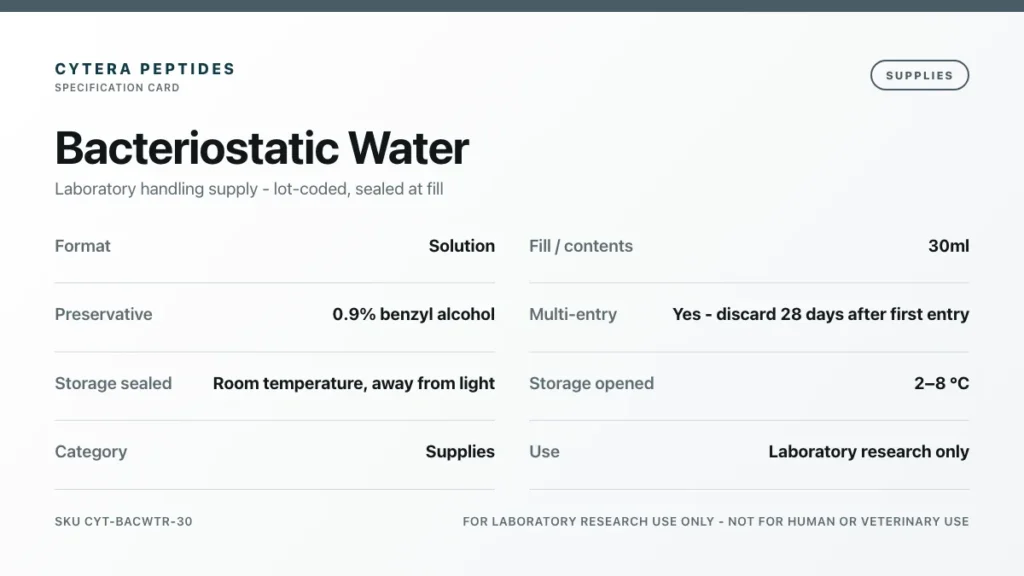
|---|---|
| Fill volume | 30ml |
| Preservative | 0.9% benzyl alcohol |
| Base | Water for injection grade |
| Container | Glass vial, rubber stopper, flip-off cap |
| Multi-entry | Yes - discard 28 days after first entry |
| Storage | Room temperature sealed; 2–8 °C after first entry |
| Category | Supplies |
Working out how much to add
The volume of Bacteriostatic Water added sets the concentration of the finished solution, and therefore how many units a given measurement occupies on an insulin syringe. Too little solvent and a small measurement becomes a fraction of a unit that cannot be read; too much and the volume becomes awkward to handle. Our free peptide calculator does the arithmetic for any vial size and target amount, and the reconstitution guide explains the reasoning.
A worked example makes the trade-off concrete. A 10 mg vial made up with 1 ml of Bacteriostatic Water gives 10 mg/ml, so 1 mg occupies 10 units on a 100-unit syringe. Made up with 2 ml it gives 5 mg/ml and the same 1 mg occupies 20 units - easier to read, and the error from a half-unit misread is halved. Made up with 3 ml the figure is 30 units and the vial holds only about 3 ml comfortably, which is the practical ceiling for a 3 ml serum vial. Most laboratories settle between 1 and 2 ml for a 5 to 10 mg vial and record the volume on the label so the concentration is never in doubt.
The volume also fixes how long a vial lasts once entered. Because Bacteriostatic Water keeps a solution usable for about 28 days, a large reconstitution volume that will not be consumed inside that window is wasted; a smaller volume, or aliquoting into single-use vials immediately after reconstitution, avoids discarding material.
Technique
- Wipe both stoppers with an alcohol prep pad and allow to dry.
- Draw the calculated volume into the syringe.
- Add solvent slowly against the inside wall of the peptide vial - never onto the cake.
- Swirl to dissolve - never shake.
- Label with the date and concentration; store reconstituted material at 2–8 °C, protected from light.
Storage and shelf life
Store sealed Bacteriostatic Water at room temperature, away from direct light, and use before the date on the label. After the first entry keep the vial refrigerated at 2–8 °C, wipe the stopper before every draw, and discard it after 28 days or immediately if the contents turn cloudy or show particles. Never return solution from a syringe to the vial.
What to look for in a solvent
Not every product sold as Bacteriostatic Water is equivalent. The points worth checking on any supplier's listing are the preservative concentration (0.9% benzyl alcohol is the standard), that the base is water for injection grade rather than purified water, that the vial is sealed with an intact flip-off cap, and that the vial carries a lot number and expiry date. A vial that lacks a lot number cannot be traced if a problem appears later. Our supplier checklist covers the same questions for peptides themselves.
Ordering Bacteriostatic Water
Orders placed before 2pm ET ship the same business day from within the United States. Shipping is free on orders over $300. Bacteriostatic Water is most often added to a peptide order so that the solvent arrives with the vial; the how-to-order guide covers payment methods and the minimum order.
Related supplies
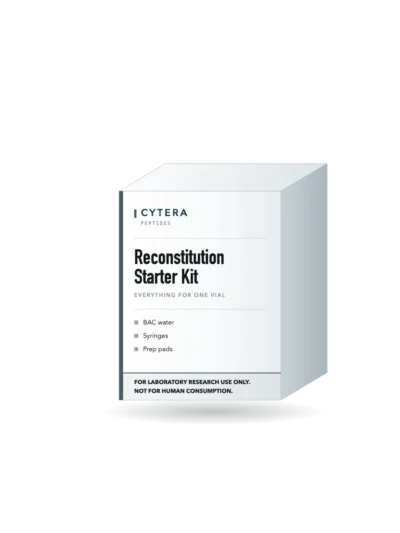
The peptide starter kit bundles Bacteriostatic Water with syringes and prep pads for a first vial. Browse the full supplies range or the peptide catalogue.
Frequently asked questions
Is Bacteriostatic Water the same as sterile water?
No. Sterile water has no preservative and is single use. Bacteriostatic water contains 0.9% benzyl alcohol and can be entered repeatedly for about 28 days.
How much should I add to a vial?
It depends on the concentration you want. Use the calculator - there is no single correct volume.
How long does an opened vial last?
Refrigerated and handled cleanly, about 28 days from first entry. Discard sooner if it becomes cloudy.
Does it need cold shipping?
No. It ships at ambient temperature, same business day for orders before 2pm ET.
Can I use it for more than one peptide vial?
Yes. A 30 ml vial covers many reconstitutions. Wipe the stopper before every draw and use a fresh syringe each time so nothing is carried between vials.
What if the vial arrives cloudy or unsealed?
Do not use it. Contact us with the lot number and we will replace it.
For laboratory research use only. Supplied for laboratory handling of research materials. Not for human or veterinary use, and not a medical device or drug product.