Reconstitution Starter Kit
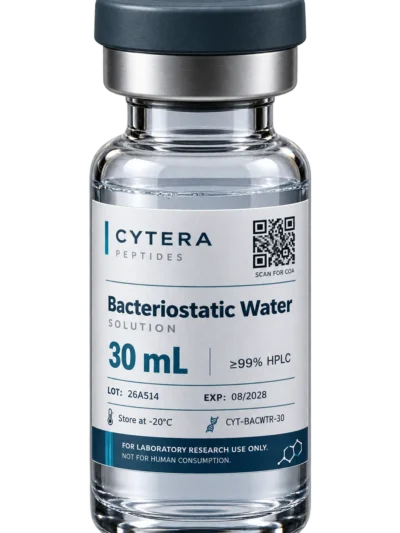
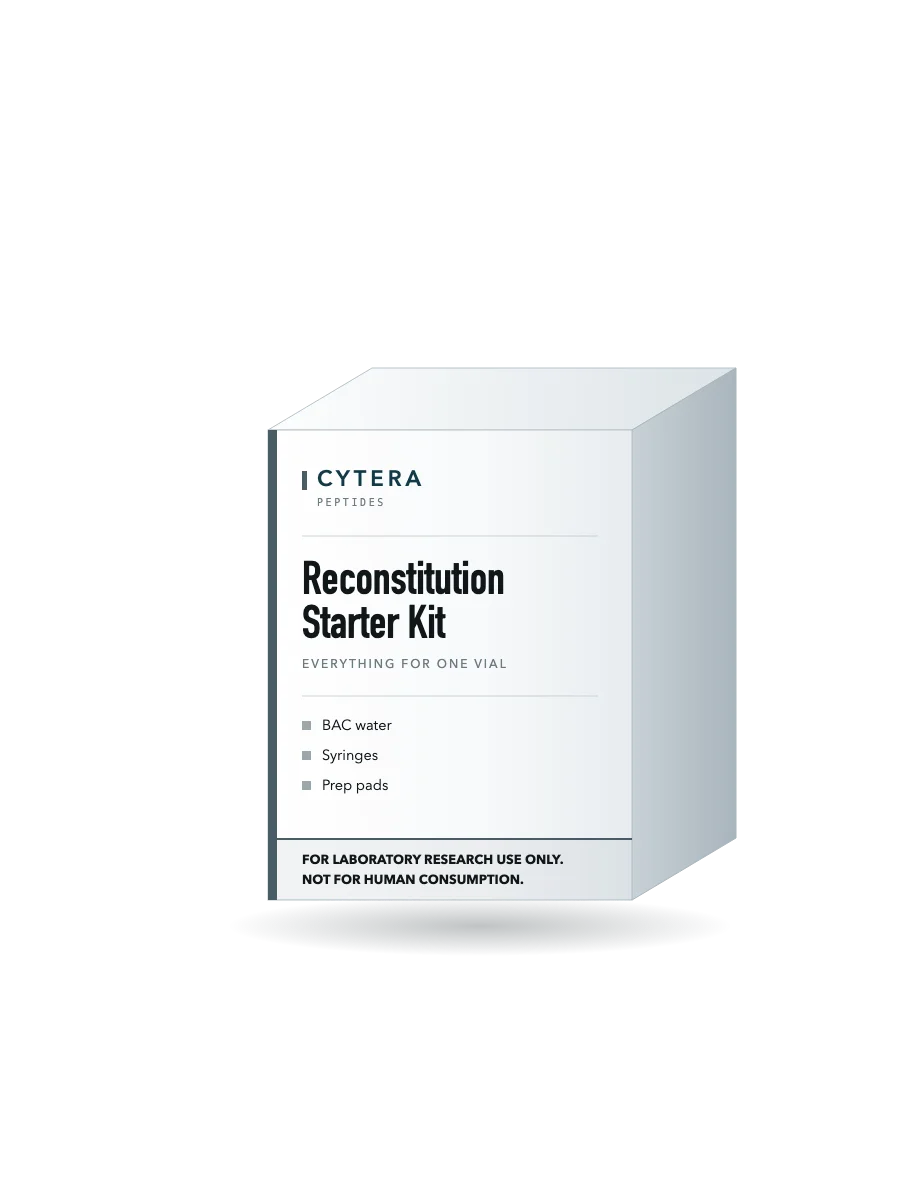
Reconstitution Starter Kit - everything needed to reconstitute and measure a single vial: bacteriostatic water, insulin syringes and alcohol prep pads.
$29.00
/ KitFor laboratory research use only. Not for human or veterinary consumption.
Technical overview
About Reconstitution Starter Kit
The Peptide Starter Kit brings together everything needed to reconstitute and measure a single vial of lyophilised research peptide, so nothing has to be sourced separately or substituted at the bench. It is assembled for laboratory handling of research materials and ships from within the United States.
Each Peptide Starter Kit is packed as a sealed set and lot-coded, so the components in your hands can be traced back to the batch they were packed from. It is intended for qualified researchers and laboratory purchasers.
What the kit contains
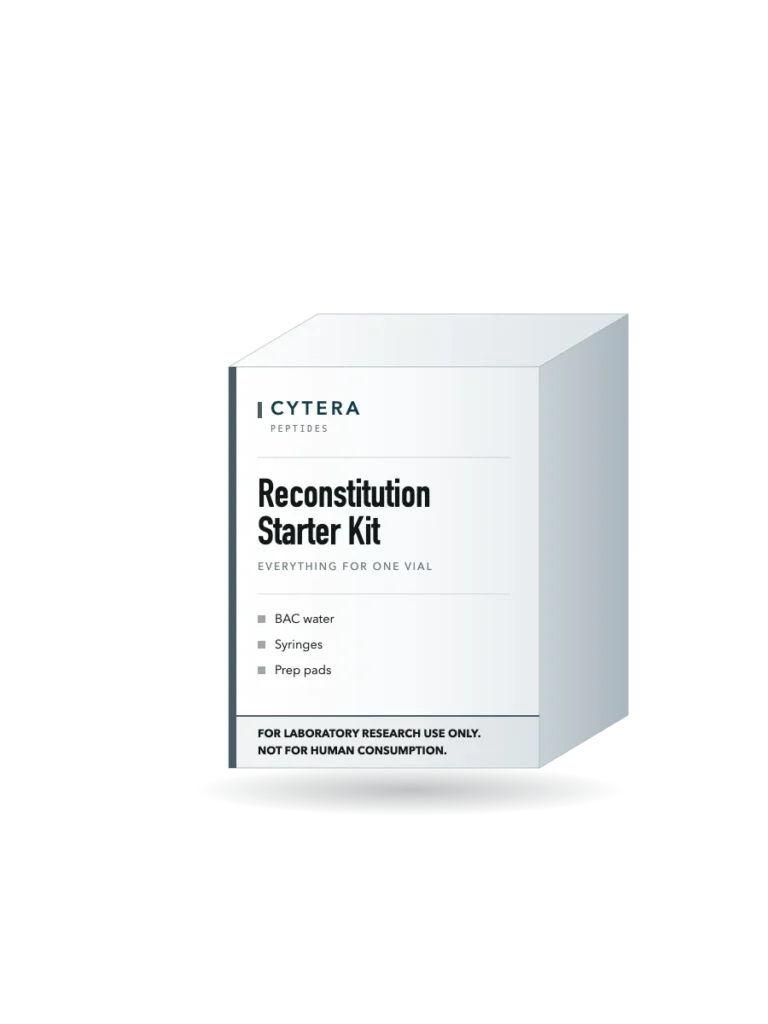
- BAC water
- Syringes
- Prep pads
Every component of the Peptide Starter Kit is a standard laboratory consumable: the bacteriostatic water is 0.9% benzyl alcohol in water for injection, sealed at fill; the syringes are individually wrapped insulin-type syringes graduated in units; the prep pads are 70% isopropyl alcohol, individually sealed. Nothing in the set is a drug product or an active material.
Why a starter kit
The Peptide Starter Kit exists because the consumables are where first attempts go wrong. A vial reconstituted with tap-sterile water from a pharmacy, measured with a 3 ml syringe graduated in tenths of a millilitre, produces a solution nobody can measure accurately or keep for more than a day. The Peptide Starter Kit supplies the three things that prevent that: a preserved solvent, a finely graduated syringe and a clean stopper.
A first order of lyophilised peptide usually arrives before the consumables needed to do anything with it. The Peptide Starter Kit closes that gap: the solvent, the measuring device and the surface preparation arrive in the same parcel as the vial, so the material is not left waiting on a bench while a second order is placed.
Buying the components as a set also standardises them. Using the same solvent, the same syringe graduation and the same preparation across every vial removes three variables from any comparison between lots or between compounds.
Using the kit
Reconstitution concentration depends entirely on how much bacteriostatic water is added to the vial: the same vial can yield very different mg/ml figures. Work out the figures for your material with the free peptide calculator before drawing anything, and follow the reconstitution guide for the method.
- Wipe the stoppers of both the peptide vial and the water vial with a prep pad and allow to dry.
- Draw the calculated volume of bacteriostatic water into the syringe.
- Add the solvent slowly against the inside wall of the peptide vial, never directly onto the cake.
- Swirl gently until clear. Do not shake - foaming indicates denaturation.
- Label the vial with the date and concentration and refrigerate at 2–8 °C.
Bacteriostatic water vs sterile water
The Peptide Starter Kit ships bacteriostatic water rather than sterile water deliberately. Sterile water carries no preservative and is intended for a single use - once the seal is broken there is nothing inhibiting contamination. Bacteriostatic water contains 0.9% benzyl alcohol, which suppresses bacterial growth and allows a vial to be entered more than once over a period of weeks. For any vial that will be accessed repeatedly it is the correct solvent. Benzyl alcohol's properties are documented on PubChem.
Reading the syringe
The syringes in the Peptide Starter Kit are graduated in insulin units, not millilitres: 100 units equals 1 ml, so each unit mark is 0.01 ml. That graduation is the reason the reconstitution volume matters. If a vial is made up so that the quantity a protocol calls for sits at 3 or 4 units, the measurement is at the limit of what the scale can resolve; made up so that it sits at 20 to 40 units, the same quantity is easy to read and repeat. The calculator reports the unit figure directly for whichever volume you choose.
Draw slightly past the target mark, then push the plunger back to the line with the needle still in the vial to clear any air. Read the plunger against the graduation at eye level - parallax across a small barrel is the most common source of measurement error at the bench, and the second most common is reading a 0.3 ml syringe as though it were a 1 ml syringe.
Storage and disposal
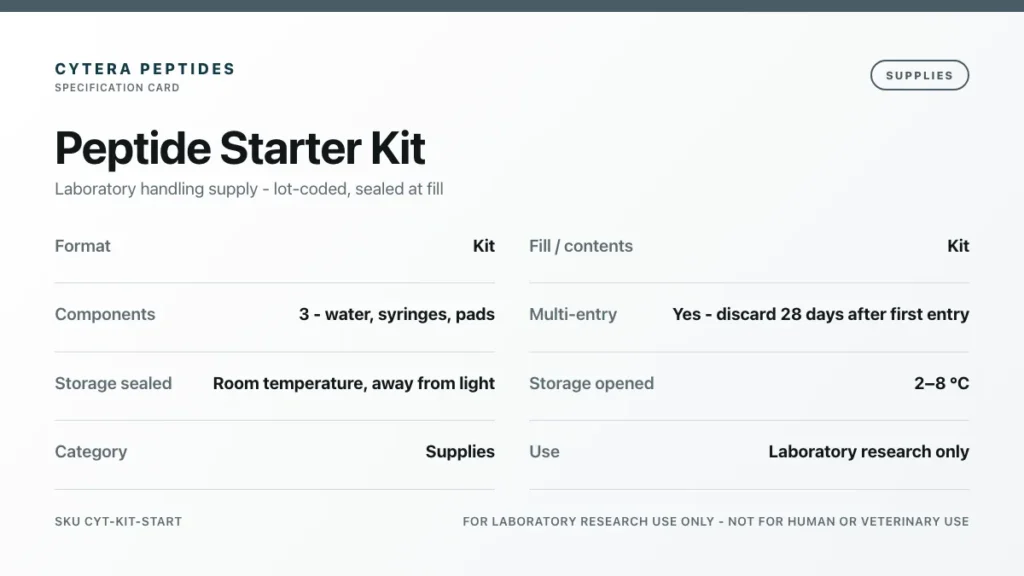
Store the unopened Peptide Starter Kit at room temperature away from direct light. Once the water vial has been entered, keep it refrigerated and discard it after 28 days or if the contents become cloudy. Used syringes go into a rigid, puncture-resistant sharps container and are disposed of through your institution's clinical or laboratory waste stream, never in general waste.
Ordering the Peptide Starter Kit
Orders placed before 2pm ET ship the same business day from within the United States. Shipping is free on orders over $300. The how-to-order guide covers accepted payment methods and the minimum order. The Peptide Starter Kit is frequently added to a first peptide order so that everything arrives together.
Pair it with
The Peptide Starter Kit covers one vial. For ongoing work, additional bacteriostatic water and the rest of the supplies range are stocked alongside the peptide catalogue. Our guide to reading a certificate of analysis explains what to look for in the documentation that accompanies any research peptide.
Frequently asked questions
Does the Peptide Starter Kit include any peptide?
No. It contains solvent and consumables only. Peptides are sold separately from the catalogue.
How many vials will one kit reconstitute?
One 30 ml water vial covers many reconstitutions; the syringe and pad count limit a kit to a handful of vials. For routine work buy syringes and pads in bulk.
How is it shipped?
At ambient temperature, same business day for orders before 2pm ET, from within the United States.
Is the Peptide Starter Kit sterile?
Each component is individually sealed by its manufacturer. The kit as a whole is assembled, not sterilised as a unit.
Which syringe size is included and why?
Insulin-type syringes graduated in 100 units per ml. That graduation resolves small volumes far better than a millilitre-marked syringe, which is what reconstituted peptide work needs.
Can I reuse a syringe?
No. Syringes are single use. Reusing one risks contaminating the vial and blunts the needle, which damages the stopper and lets air into the vial.
What if the water vial arrives cloudy?
Do not use it. Contact us with the lot number on the label and we will replace it.
For laboratory research use only. Supplied for laboratory handling of research materials. Not for human or veterinary use, and not a medical device or drug product.